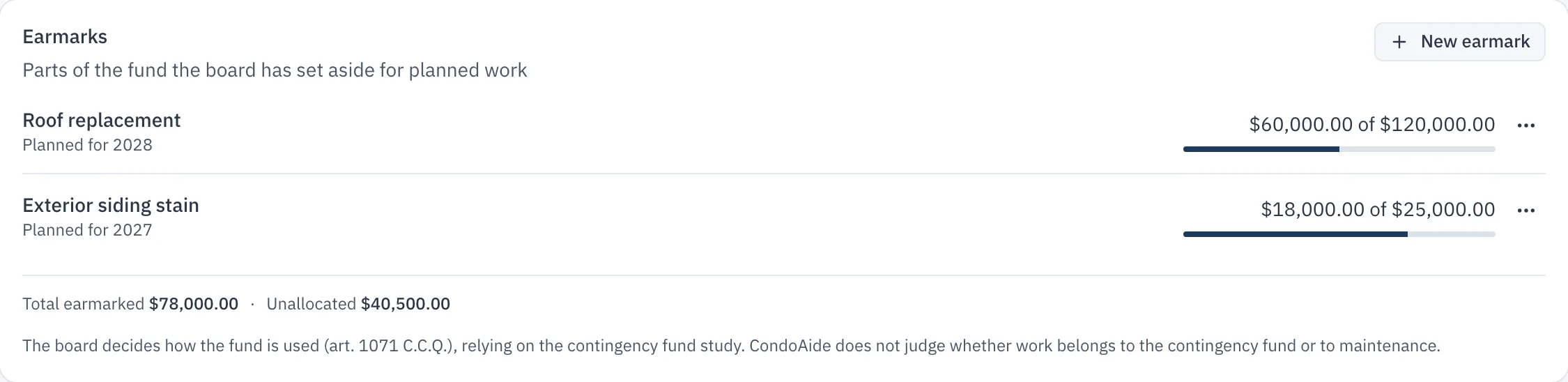
A $118,500 contingency fund says little on its own. The board knows that $60,000 of it is already waiting for the roof replacement planned for 2028, and that $18,000 is promised to the exterior siding stain. Earmarks let it record that in CondoAide.
Set part of the fund aside
The "Contingency fund" page now has an "Earmarks" card. "New earmark" sets part of the fund aside under a name, such as "Exterior siding stain", with an optional target amount, target year and planned work from the work plan. The board then moves amounts into it with "Allocate", or returns them to the fund with "Release".
An earmark moves no money: the fund balance does not change. The card shows the total earmarked and the "Unallocated" part, and warns the board when earmarks exceed the fund balance.
Draw an expense from an earmark
A contingency fund expense can be drawn from an earmark, from the ledger with "Draw from an earmark", or when completing the linked work. If the invoice exceeds the earmark, the earmark drops to zero and the rest comes from the unallocated part of the fund.
An earmark that is no longer needed can be archived; its history stays visible. Co-owners with access to the fund see the card, without being able to change it.
Deciding how the fund is used remains the board's call (art. 1071 CCQ), relying on the contingency fund study. CondoAide does not judge whether work belongs to the contingency fund or to maintenance.
Groupe Darheim studies
The contingency fund study import now reads Groupe Darheim studies. It flags figures in the study that do not agree with each other, and shows special assessments in red only when some are owed. A syndicate with several buildings no longer has to pick a building before importing its study, which covers the whole syndicate.
How the board then corrects the year or cost of work planned in the study: Reserve fund work plan: the board corrects it without losing the study.