A board that wants to meet by video usually ends up paying for a Zoom or Teams subscription, or accepting the free tier's 40-minute cut-off in the middle of a budget discussion.
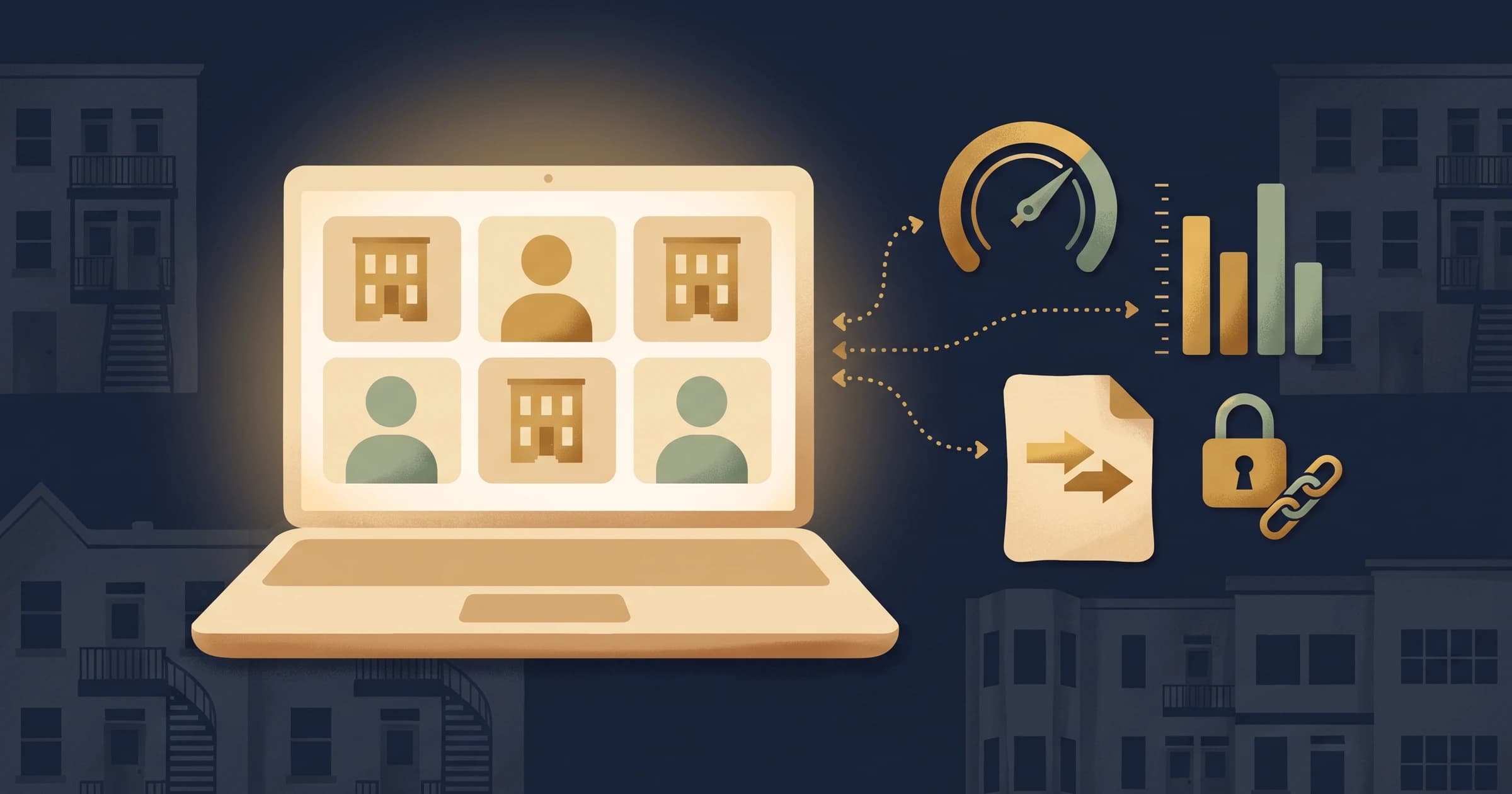
CondoAide now includes video meetings, directly in the platform.
What it does
- Informal board meetings from a single link, with nothing to install.
- Knock to admit: a participant knocks, a board member lets them in. The room is not open to anyone holding the link.
- Moderation: a board member can remove a participant.
- Screen sharing, and when a share fails the tool says why instead of sitting frozen.
- A guest can switch the interface language for themselves.
- Empty calls end on their own, instead of leaving a room open all night.
Where the video goes
This is the part that separates the feature from an ordinary video subscription.
The server that relays audio and video is a dedicated machine in Beauharnois, Quebec. Your meeting's stream passes through that server and does not leave Quebec. The console used to deploy it sits elsewhere, but it is never in the media path: even when unavailable, it neither sees nor carries a single second of your meeting.
For a syndicate this is not academic. A board meeting covers arrears files, disputes, sometimes personal situations. Knowing where those exchanges travel is part of the responsibility Loi 25 places on the syndicate.
The rest of the platform follows the same logic: hosting on Vercel in the Montreal region, a Supabase database in the Canadian region, backups kept in Quebec. Vercel and Supabase remain American providers operating those regions - it is their location that is in Quebec, not their head office. The full list of our sub-processors is in the privacy policy.
CondoAide does not end-to-end encrypt calls in the technical sense of the term; audio and video are encrypted in transit and relayed by the server described above.