A tenant often reports a leak, a noise or something broken in the common portions to the syndicate. But some of their requests are really about the owner, who is their landlord, and the board had no simple way to say so. Tenant requests now have their own path.
The tenant files a request for their unit
The tenant finds "Requests" in their menu. They can file a "Maintenance", "Complaint" or "General" request; the other types, such as a document request or a work authorization, stay reserved to co-owners and the board.
The request is tied to the unit they rent or occupy, shown under "Unit concerned". If they occupy several, they pick the right one. The form tells them: "This unit's co-owners can view the request and the board's replies."
The co-owner is notified
The unit's co-owner gets a notice in CondoAide and an email headed "Request from your unit's tenant". They can open the request and read the board's replies, but not the internal notes. Only the co-owners who already owned the unit on the day of the request, and still do, have access to it.
The notice goes to the co-owner designated as the unit's primary contact. Each notice and each email is written in the language of the person who receives it.
The board sees where the request comes from
In the list and on the request page, the request carries the line "Filed by the tenant of unit 004", for example. The board handles it like any other request.
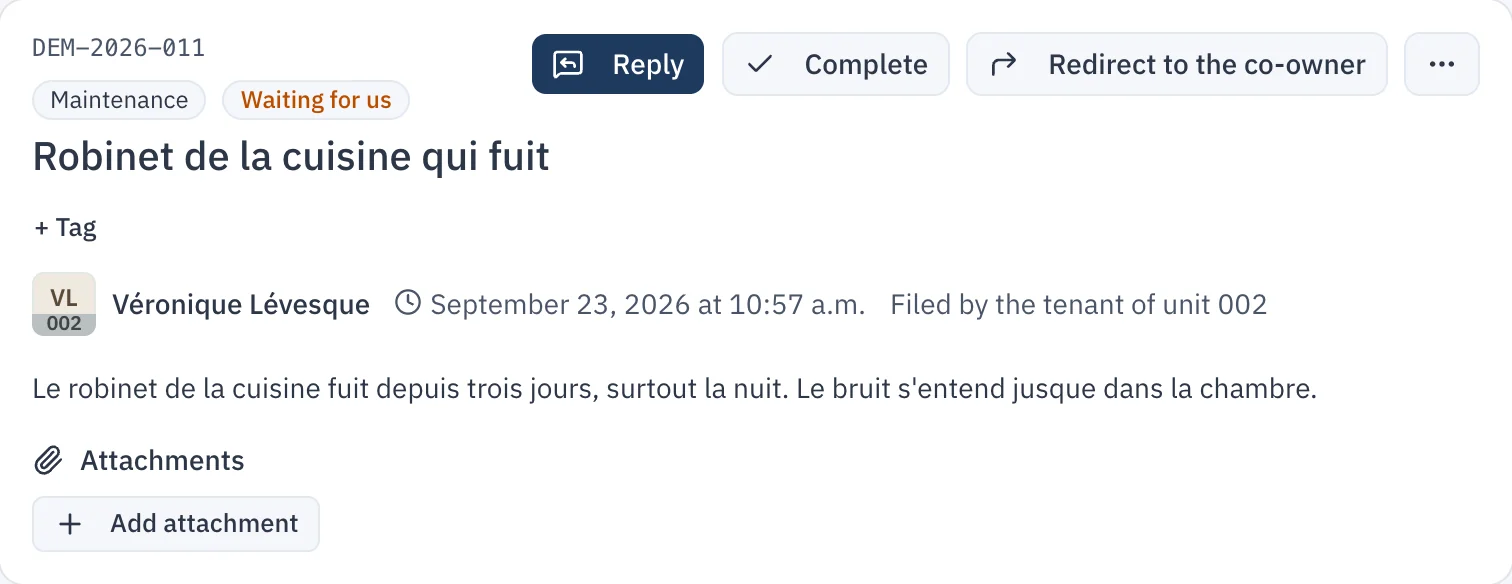
Redirect to the co-owner
When the matter belongs to the co-owner, as landlord, and not to the syndicate, the board clicks "Redirect to the co-owner". The request is closed as "Resolved", and the page explains it to everyone: "Request resolved and redirected to the co-owner. This matter is for the co-owner to handle, as landlord."
The tenant and the co-owner each get a notice and an email. The tenant's email invites them to contact their landlord directly.
The board can reopen the request if needed. If no co-owner of the unit can receive the notice, the button is disabled and the reason is shown.